Conference
Invited Speakers
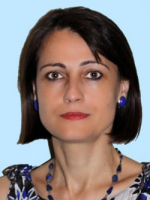 Prof. Dr. Hab. Daniela-Cristina BERGER
National University of Science and Technology Politehnica Bucharest, Faculty of Chemical Engineering and Biotechnologies, Department of Inorganic Chemistry, Physical-Chemistry & Electrochemistry, ROMANIA
She holds PhD degree in Chemical Engineering at University “Politehnica” of Bucharest (2001). She did postdoctoral training at Institute de Recherche sur Catalyse, Villeurbane, France (2003) and Institut de Ciencia de Materials de Barcelona (ICMAB-CSIC), Spain (2005-2007). Since October 2013 she has been professor in the Department of Inorganic Chemistry, Physical Chemistry & Electrochemistry.
Her scientific activity covers the topic of nanostructured inorganic and composite materials, including mesoporous materials, for various domains. Her scientific activity focused on studies of physicochemical processes due to nanoconfinement in mesoporous matrices. For her contribution in this field, she was awarded the “Petru Spacu” prize of the Romanian Academy in 2017. In the last years she has implemented several projects, and her group developed new drug delivery systems based on functionalized mesoporous silica, or nanocomposites based on natural compounds with antioxidant, antimicrobial, anti-inflammatory or antiproliferative activities for topical applications. She has published over 160 papers in peer-reviewed journals, 4 national patents and 3 book chapters.
ORCID: 0000-0002-7829-7540
Email: daniela.berger[at]upb.ro
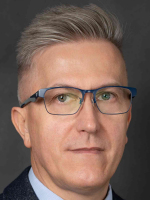 Prof. dr hab. Mirosław Chorążewski
University of Silesia in Katowice, Institute of Chemistry, POLAND
Prof. Mirosław Chorążewski (https://www.thermodynamics.us.edu.pl/) is a professor at University of Silesia in Katowice, and Deputy Dean for research and international cooperation at the Faculty of Science and Technology. He received his Ph.D. from the University of Silesia and was a Post-doctoral Fellow at Universite Blaise Pascal (France), and Academy of Sciences of the Czech Republic. Chorążewski’s research group Thermodynamics in Action works on understanding the behavior of materials under high-pressure conditions.
Privately, he is the president of the Reksio Foundation (http://fundacjareksio.org/), which takes care of the image of the most famous Polish fairy tale.
Research focus: high-pressure calorimetry, PVT techniques, thermodynamics of compressed liquids and solid-liquid interfaces, equations of state.
https://www.thermodynamics.us.edu.pl
ORCID: 0000-0002-8912-9024
Email: miroslaw.chorazewski[at]us.edu.pl
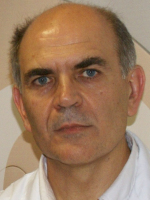 Prof. Eduardo Fernández
Universidad Miguel Hernández de Elche, SPAIN
Professor Eduardo Fernández is Director of the Bioengineering Institute at the University Miguel Hernández (Spain), Adjunct Professor at the University of Utah (USA), and Excellence Professor at Radboud University (The Netherlands). He is a qualified physician-scientist who combines biomedicine, physical sciences, and engineering to develop innovative treatments and neurotechnological devices aimed at improving the lives of people living with visual impairments.
Professor Fernández leads a research group working at the forefront of visual neuroprosthetics and brain-computer interfaces (BCIs) for vision restoration. Their research integrates multielectrode array recording and stimulation, long-term biocompatibility studies, artificial intelligence, and computational neural modelling, with a particular focus on advanced closed-loop systems for bidirectional communication with the brain.
His work also encompasses the study of brain plasticity in blind individuals and the development of novel therapeutic strategies for retinal degenerative diseases, including gene therapy, optogenetics, and optopharmacology.
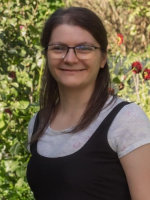 Dr. Damaris-Cristina GHEORGHE
Laboratory of Electrochemistry and PATLAB at the National Institute of Research for Electrochemistry and Condensed Matter (INCEMC), ROMANIA
Dr. Damaris-Cristina Gheorghe, an experienced researcher, has received international awards for her scientific presentations. Additionally, she has actively engaged in research as a member of the Laboratory of Electrochemistry and PATLAB at the National Institute of Research for Electrochemistry and Condensed Matter (INCEMC), with 9 years of experience in stochastic sensors. Her scientific profile is defined by a strong ability to connect electrochemical innovation with practical analytical applications, transforming complex sensing concepts into reliable research tools. Through her international exposure and sustained laboratory experience, she brings both scientific rigor and collaborative energy to interdisciplinary projects.
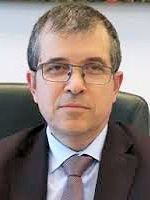 Prof. Dr. Horia IOVU
University POLITEHNICA of Bucharest, ROMANIA
HORIA IOVU is professor of polymer science and technology, chemist engineer, specialization in Composite Materials (Manchester Metropolitan University, U.K., 1994-1995), PhD in Chemistry and Technology of Polymers (1995); full professor since 1999 (University Politehnica of Bucharest – Department of Bioresurces and Polymer Science); Member of the National Council for Research in Higher Education (CNCSIS) (2005-2011); President of the National Council for awarding the universitary titles in Romania, the field of Chemical Engineering (since 2006); Vice-Rector / Director of Council for Doctoral Studies (since 2012); Full member of the Romanian Academy of Scientists; Fellow of the Royal Society of Chemistry (FRSC), Fellow of the Romanian Chemical Society. Professional experience: elastomers synthesis by polymerization of dienes with lanthanide-based catalysts, composite materials-synthesis and design, nanocomposite materials based on polymer matrices reinforced with silicates, nanocomposite materials based on polymer matrices reinforced with carbon nanotubes / graphene, carbon nanotubes – modification and compatibilization, biomaterials for scaffolds, collagen-HAP-synthetic polymers composites, polymer-based drug delivery systems. Scientific activity: Group leader for the research group The Advanced Polymer Materials Group (2005-2024) devoted to synthesis and characterization of new nanocomposites based on various polymers and reinforcing agents (www.apmg.pub.ro) for various applications including bioengineering, author / coauthor of more than 205 papers published in WoS – rated journals, 6 books published at national level and 5 book chapters at international level.
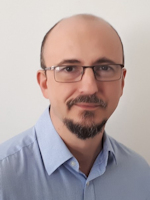 Dr. Dan Niculescu-Duvaz
Oncodrug Limited, Runcorn, UK
Dan holds a PhD in Medicinal Chemistry from the University of London and has over 30 years of experience in synthetic and medicinal chemistry and drug discovery. He joined Oncodrug as Head of Chemistry following five years at the CRUK Manchester Institute Drug Discovery Unit, where he served as Head of Medicinal Chemistry. Before that, he worked at The Institute of Cancer Research in London on a variety of medicinal chemistry and chemical biology projects. Dan was lead medicinal chemist on several projects that delivered nominated preclinical candidates, and a clinical candidate, RAF/SRC inhibitor BAL3833, that completed succesfully a Phase I clinical trial. He has expertise in Intellectual Property strategy and has led on patent filings and IP portfolio management on multiple projects. Dan has contributed to several successful grant applications including grants from Wellcome Trust, and has served as an associate supervisor to six PhD students. Dan is a co-author on 47 scientific publications and a named inventor on 25 patents. His research focuses on discovery of new chemical entities for use in the treatment of unmet medical needs in oncology, fibrosis and cardiometabolic diseases.
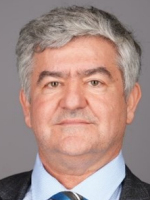 Dr. Florin OMOTA
Fluor Corporation
Dr. Florin Omota is Fluor Fellow in Process Control and Functional Safety at Fluor’s Amsterdam office in the Netherlands. He holds an Engineering Diploma in Organic Chemical Technology from the Polytechnic Institute of Bucharest and a PhD in Chemical Engineering from the University of Amsterdam.
He began his career at Chimopas S.A. Bucharest (1989–1999), progressing from research engineer to Plant Chief Engineer for the Etherglycols and Derivatives production facility. During this period, he also served as a part time assistant professor at the Faculty of Industrial Chemistry, University Politehnica of Bucharest.
Between 1999 and 2005, Dr. Omota was a researcher in the Chemical Engineering Department at the University of Amsterdam. His work included Reactive distillation for fatty acid esterification, combining Aspen simulations with experimental validation of physical and chemical properties as well as Noble metal catalyst performance in slurry bubble columns, with focus on interfacial phenomena and catalyst hydrophobicity.
Since joining Fluor, Dr. Omota has developed deep expertise in process design and intensification, automation, advanced process control, optimization, and process safety. He has been recognized as a Subject Matter Expert in Process Control since 2015. In 2018, he became a Certified Functional Safety Expert (CFSE) through Exida, and in 2022 he was appointed Fluor Fellow for his contributions to process control and functional safety.
In recent years, he has been invited to deliver lectures on Functional Safety within the Process Control and Process Intensification programs at the Technical University of Delft (TU Delft).
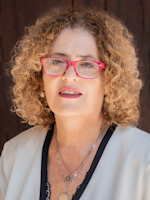 Dr. Nava SHAKED
School of Multidisciplinary Studies, Holon Institute of Technology, ISRAEL
Dr. Nava Shaked is the head of The School Multidisciplinary Studies in - Holon Institute of Technology, Israel and an Adjunct professor at the PhD program at CUNY GC, Computational Linguistics She holds a Ph.D. from CUNY GC. Shaked is an expert in Artificial Intelligence, Natural Language processing, Human-Machine interaction, with 20 years' experience in both technology research as well as leading major projects in Israel, Europe and the US Hi-tech Industry. Shaked was acting as an advisor for major enterprises, leading customer strategy, designing system architecture, providing Professional Service and heading AI projects. In addition, she is a member of GPAI - The Global Partnership on Artificial Intelligence, an international initiative established to guide the responsible development and use of artificial intelligence for large cooperations and governments to ensure Responsible AI.
More industry and academic info about projects and publications can be found in:
https://orcid.org/0000-0002-2362-4663
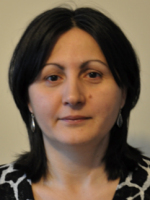 Floriana TUNA
University of Manchester, UK
Floriana Tuna is a Reader in Inorganic Chemistry at the University of Manchester (UK), where she leads a research group focused on studies of metal organic frameworks (MOFs) for NO2 and CO2 capture, and of magnetic materials for quantum information technologies. She is also Manager of EPSRC UK National Research Facility for Electron Paramagnetic Resonance Spectroscopy, and the Academic Lead of Photon Science Institute Advanced Instrument Development Theme, Manchester.
Floriana holds BSc and MSc degrees in chemistry from the University of Bucharest, and PhD degree in magnetism and coordination chemistry from the Physical Chemistry Institute of the Romanian Academy in Bucharest (1997). She did postdoctoral training at the University of Heidelberg (Germany, 2000), the Institute for Solid State Chemistry Bordeaux (ICMCB,-CNRS France, 2000-2001), University of Warwick (UK, 2001-2003) and University of Manchester (UK, 2003-2006). She has been awarded a Romania Academy ‘Ilie Murgulescu’ Prize for seminal research, two Royal Society Horizon prizes (2021, 2024), a Royal Society Dalton Division Prize (2010), and several other awards including Leverhulme fellowship, and Marie Curie and DAAD fellowships. Her main research is centred on d/f-block organometallic and metal organic molecular materials (including MOFs) for applications that concern quantum information storage and processing, selective gas capture, catalysis and nuclear science. Here she uses EPR and magnetometry to probe electronic structures, spin dynamics, and reaction mechanisms, amongst other interests.
She has published over 370 papers in peer-reviewed journals, including 28 articles in Nature Publ. journals and Science, 3 book chapters and 11 conference proceedings (H-index: 78; > 20764 citations) and has supervised 22 PhD theses to date.
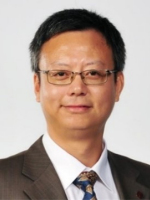 Hua ZHANG
City University of Hong Kong, CHINA
Dr. Hua Zhang is the Herman Hu Chair Professor of Nanomaterials and Director of Hong Kong Institute for Clean Energy in City University of Hong Kong. He has filed 100 patent applications, and published 600+ papers including Nature and Science papers. As at June 2026, the total cited times are over 151,600 with H-index of 192 (Web of Science), and over 171,000 with H-index of 203 (Google Scholar). His numerous awards/honors include Foreign Fellow of the European Academy of Sciences (EurASc), ''Highly Cited Researchers'' in Materials Science (Clarivate Analytics/Thomson Reuters, 2014-2025 (12 consecutive years)), in Chemistry (Clarivate Analytics/Thomson Reuters, 2015-2025 (11 consecutive years)), and in Environment and Ecology (Clarivate Analytics, 2022), one of 19 “Hottest Researchers of Today” in the world in the World’s Most Influential Scientific Minds 2015 as well as one of 17 “Hottest Researchers of Today” and No. 1 in Materials and More in the world in the World’s Most Influential Scientific Minds 2014 (Thomson Reuters), Gold Medal, the 51st International Exhibition of Inventions Geneva, Croucher Senior Research Fellowship, 2nd Carbon Energy Golden Banyan Award, BOCHK Science and Technology Innovation Prize, IUMRS-Frontier Materials Scientists Award, ACS Nano Lectureship Award, World Cultural Council (WCC) Special Recognition Award, etc. His current research interests focus on phase engineering of nanomaterials (PEN) and controlled epitaxial growth of heterostructures for various applications including green catalysis, clean energy, (opto-)electronic devices, chemical and biosensors, and water remediation.